
The Ultimate Guide to Airless Pump Functionality
If your formulation contains Retinol, Vitamin C, or organic bio-actives, a standard dip-tube pump is actively ruining your product. Here is why airless technology is essential.
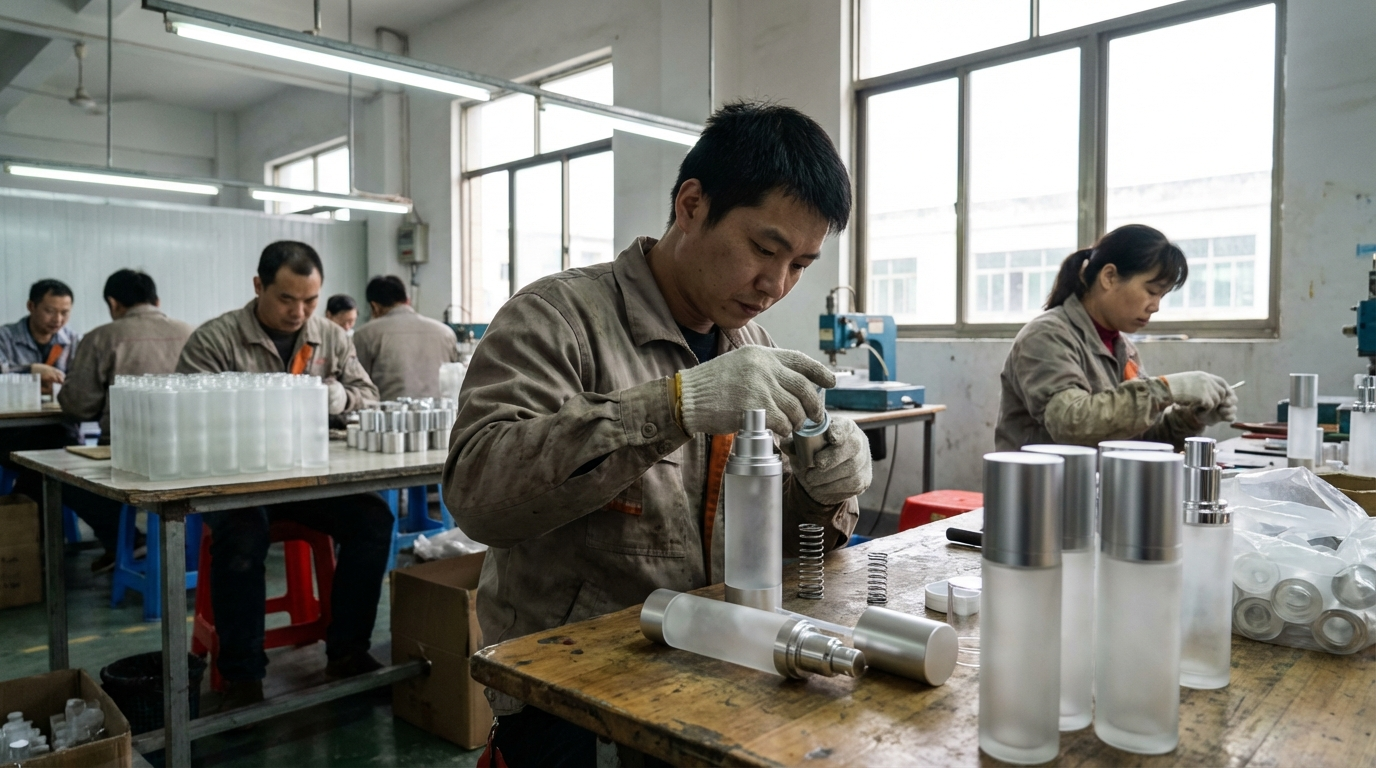
The Mechanics of Airless
Traditional lotion pumps feature a plastic dip tube that reaches the bottom of the bottle. When depressed, it pulls the liquid up. However, to equalize the pressure, it pulls ambient air into the bottle.
An airless pump has no dip tube. Instead, it features a freely moving piston disk at the bottom of the bottle. A vacuum is created when the user presses the pump mechanism. To equalize the pressure, the bottom piston moves slightly upward, pushing the cream or serum toward the dispensing nozzle.
Why Oxygen is the Enemy
Oxidation degrades the efficacy of active skincare ingredients rapidly. It also accelerates bacterial growth, meaning formulators have to add harsh synthetic preservatives to ensure shelf stability.
Because airless packaging establishes a one-way valve system where ambient air never enters the main chamber, the formula remains under a perfect vacuum seal. This extends the product's shelf-life by 15% to 20% and allows brands to cleanly formulate "preservative-free" or "natural" product lines.
The Zero-Waste Advantage
Have you ever struggled to get the last 10% of lotion out of a bottle because the dip tube couldn't reach the corners? Airless systems resolve this. Because the piston physically scrapes the sides of the bottle as it moves upward, airless dispensing offers a near 99% evacuation rate. Consumers get exactly what they paid for.