
Glass vs. PETG: Which is right for your serum?
When packaging a high-value serum, the material you choose dictates the entire consumer experience and supply chain logistics. Here is a definitive breakdown of Glass versus Polyethylene Terephthalate Glycol (PETG).
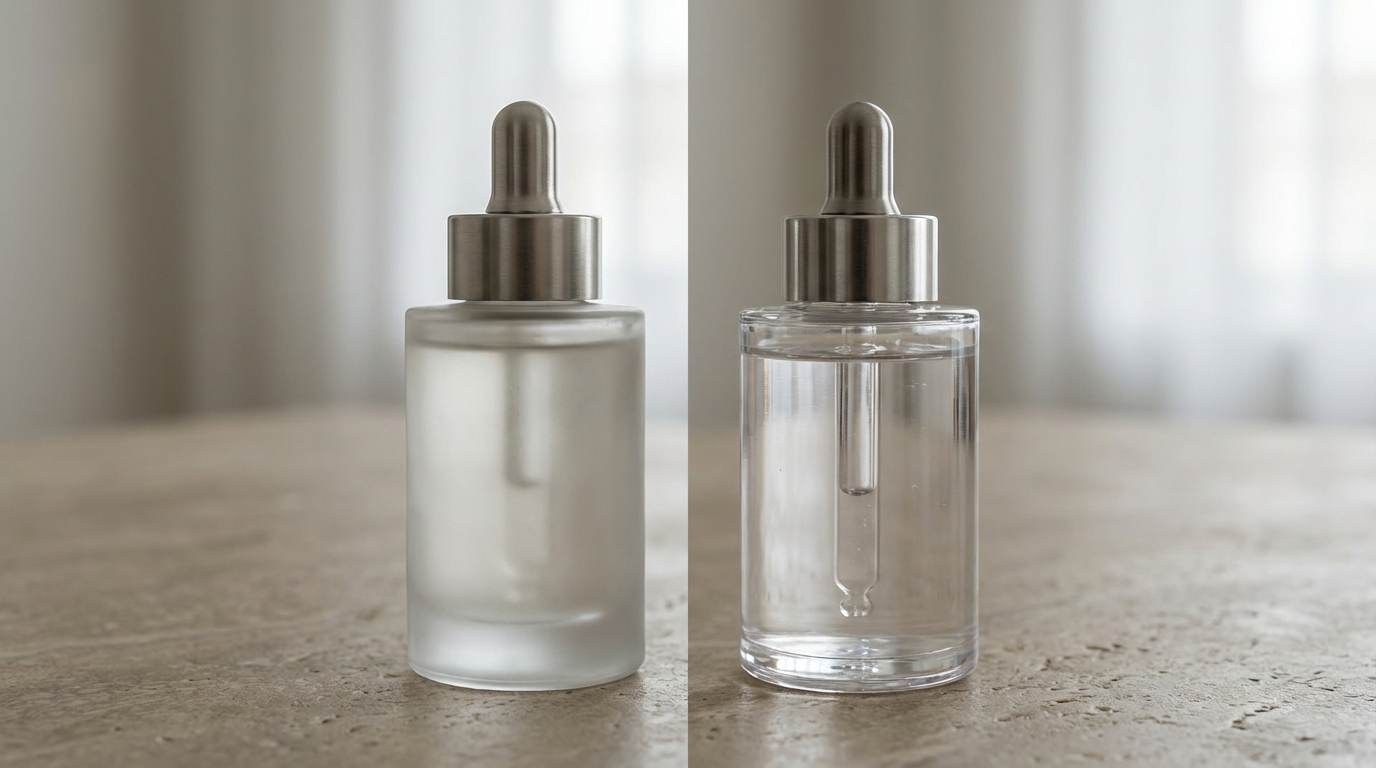
The Case for Glass Packaging
Glass is the historical gold standard for luxury cosmetics. For premium serum bottles, heavy-wall glass provides an unmistakable weight and cold tactile feel that signals quality before the product is even used.
From a formulation perspective, glass is completely inert. It will not react with complex chemical structures, highly concentrated Vitamin C (L-ascorbic acid), or essential oils. Furthermore, glass supports high-temperature firing, allowing for permanent acid-etched frosting and robust hot-stamping decoration that cannot easily be scratched off.
The Rise of PETG
PETG has rapidly gained market share among D2C (Direct-to-Consumer) indie brands. Why? Because it solves the largest problem with glass: fragility.
PETG provides the optical clarity of glass but is virtually shatterproof. This dramatically reduces breakage during international shipping and last-mile delivery, lowering replacement costs. Additionally, PETG is lighter than glass, reducing freight emissions and shipping weights.
Making the Decision
If your primary distribution channel is physical luxury retail and your price point reflects a prestige positioning, Heavy-Wall Glass remains the superior choice.
However, if you are an e-commerce native brand shipping individual units globally, or if your serum is marketed as a travel-friendly staple, PETG offers the perfect balance of premium aesthetics and logistical durability.
Need material advice for your formulation?
Our engineering team can review your ingredient deck and recommend the safest, most premium packaging option.
Consult an Expert